A brake pedal that feels softer than usual on a morning commute is not something to put off until the next oil change. Neither is a squeal that gets louder at every stop, a steering wheel that shakes under braking, or a vehicle that pulls toward one side. For brake repair Edmonton drivers can rely on, the goal is simple: identify the cause early, restore confident stopping power, and help prevent a smaller concern from becoming a more expensive repair.
Edmonton driving puts a lot on a braking system. Stop-and-go traffic, winter slush, road sand, rapid temperature changes, potholes, and long highway trips all contribute to wear. Your brakes are designed to wear over time, but the way they wear can reveal a great deal about the condition of your vehicle.
When Brake Repair in Edmonton Should Not Wait
Some brake concerns are easy to notice. Others build gradually, which is why drivers sometimes adjust their habits without realizing that stopping performance has changed. If you are pressing harder on the pedal, leaving extra room before a stop, or avoiding braking firmly because the vehicle feels unstable, schedule an inspection.
A high-pitched squeal can be caused by a wear indicator contacting the rotor. It may also come from surface rust or debris, particularly after wet weather. A brief noise that disappears after a few stops is different from a consistent or worsening squeal. Grinding is more urgent. It can mean the brake pad material has worn down and metal is contacting metal, which can damage the rotor.
Vibration through the brake pedal or steering wheel during braking should also be checked. The cause may be uneven rotor surfaces, but suspension, wheel, tire, or alignment issues can contribute to a similar sensation. A proper inspection matters because replacing one visible part without identifying the underlying issue can leave the concern unresolved.
Book service promptly if you notice any of these signs:
- A brake warning light, ABS light, or both appearing on the dashboard
- A spongy pedal, a pedal that sinks unusually low, or a sudden change in pedal feel
- Pulling, drifting, or an uneven response while braking
- Grinding, persistent squealing, burning smells, or smoke near a wheel
- Brake fluid leaking beneath the vehicle or visibly low fluid in the reservoir
These symptoms do not all point to the same repair, but they all deserve professional attention. Brakes are not a system where guessing is worth the risk.
What a Complete Brake Inspection Looks For
Brake service is more than installing new pads. A detailed inspection considers the parts that create stopping force, the components that transfer it, and the hardware that allows everything to move correctly.
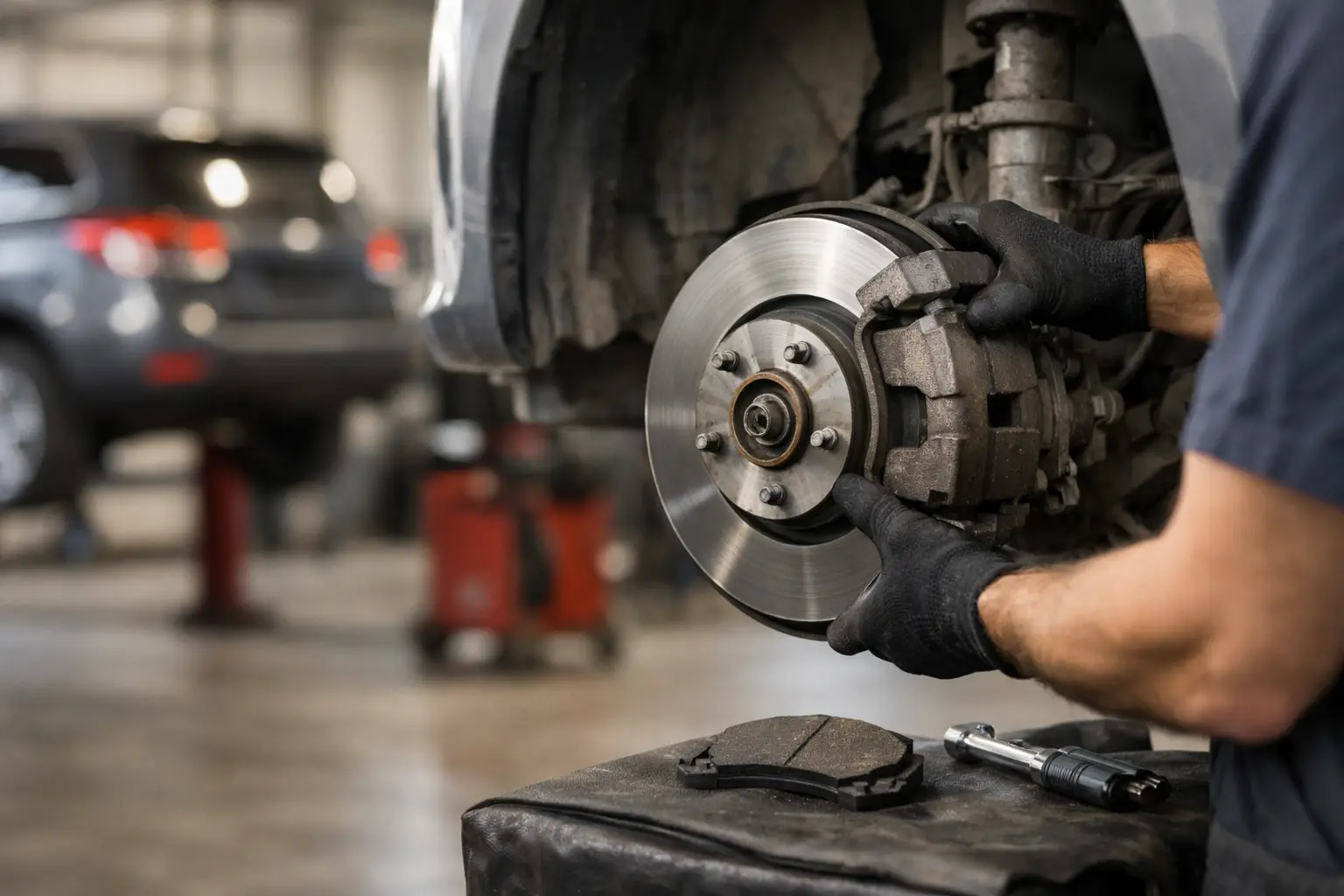
Technicians typically assess pad thickness and wear patterns, rotor condition, caliper operation, brake hoses, fluid level and condition, and parking brake performance. They also look for seized or sticking calipers, damaged hardware, corrosion, uneven tire wear, and suspension concerns that may affect vehicle control under braking.
Pad wear tells an important story. If one pad is much thinner than the other, the issue may be more than normal use. A sticking caliper or worn guide pin can keep one side of the brake working harder than it should. Replacing pads alone may temporarily quiet the noise, but it will not correct the cause of the uneven wear.
Rotor decisions also depend on condition. Some rotors can be refinished if they meet manufacturer specifications. Others need replacement because they are too thin, heavily corroded, cracked, or heat-damaged. The right option depends on the vehicle, the condition of the parts, and the repair that will provide reliable braking afterward.
Brake Fluid Is Part of the Safety System
Brake fluid transfers pressure from your foot at the pedal to the brakes at each wheel. Over time, it can absorb moisture, which reduces its effectiveness and may contribute to internal corrosion. A fluid inspection helps determine whether a flush is due based on its condition and the vehicle manufacturer's maintenance schedule.
If the pedal suddenly feels soft or travels farther than normal, do not assume it is only old fluid. Air in the hydraulic system, a leak, or a failing component may be involved. That calls for diagnosis before the vehicle returns to regular use.
Edmonton Weather Makes Timing Matter
Winter does not create brake wear on its own, but it can expose a system that is already close to its limit. Cold temperatures, moisture, road salt, and sand can accelerate corrosion around rotors, calipers, lines, and hardware. Slippery roads also demand more from your brakes and your tires.
Before winter, it makes sense to have brake performance assessed if you have noticed any noise, vibration, or longer stopping distances. This is also a practical time to check tire condition, wheel alignment, and suspension components. These systems work together. Strong brakes cannot compensate for tires with poor traction, and properly inflated tires cannot correct a vehicle that pulls because of a brake or alignment issue.
Spring brings another useful checkpoint. After months of slush and road debris, an inspection can catch corrosion-related concerns before summer travel, towing, or longer highway drives. For families, commuters, rideshare drivers, and work vehicles, planning service around the seasons can reduce unexpected downtime.
Why the Cheapest Brake Quote Is Not Always the Best Value
Brake repairs should be clear and straightforward, but the lowest initial price does not always reflect the full scope of work. One quote may include pads only, while another includes rotors, hardware, fluid service, or correction of a seized caliper. Comparing estimates means comparing the parts, labor, warranty coverage, and diagnosis behind them.
There are reasonable trade-offs. A vehicle with rotors in good condition may only need pads and hardware. A vehicle with deeply grooved or corroded rotors may need more complete service to stop smoothly and safely. The best repair is not automatically the most expensive one. It is the one that addresses the actual condition of the vehicle and uses appropriate parts for how you drive.
Ask what was found, what needs attention now, and what can be monitored. A service provider should be able to explain the difference in plain language. That gives you control over the decision while ensuring urgent safety concerns are not delayed.
One Shop for Brakes, Tires, Alignment, and Collision Concerns
A brake concern can overlap with other vehicle issues. If your car pulls while stopping, the cause may involve braking components, but damaged suspension parts, tire wear, or wheel alignment can also affect how the vehicle tracks. After a collision or curb impact, these connections are especially relevant.
Having mechanical, suspension, alignment, tire, diagnostic, and collision repair capabilities in one location can save time and reduce uncertainty. Instead of moving your vehicle between multiple facilities, you can have related systems inspected together and receive a clearer picture of what is affecting safety and performance.
DAS Automotives provides brake repair alongside mechanical repairs, inspections, tires, wheel alignments, parts, and collision restoration in Edmonton. If repair costs arrive at the wrong time, accessible financing options can also help drivers address necessary work without postponing a safety-related repair.
Keep Small Changes From Becoming Major Repairs
Your vehicle does not need to be making a dramatic noise before it deserves attention. Schedule brake service when the pedal, sound, vibration, or vehicle handling changes from what feels normal. Early inspection can protect rotors and related components, reduce disruption to your schedule, and give you the confidence that your vehicle is ready for the next school run, commute, or drive out of town.
If something feels different when you stop, trust that signal and have it checked. Staying in control of your car starts with knowing it can stop when you need it to.