A collision does not need to look dramatic to affect the structure beneath your vehicle. A curb strike, pothole impact, rear-end collision, or hit to the wheel can shift key mounting points by a small amount that changes how the car drives. For car frame repair Edmonton drivers can rely on, the goal is not simply to make damaged panels look straight again. It is to return the vehicle’s structure, suspension geometry, and safety systems to their proper specifications.
That distinction matters on Edmonton roads, where winter ice, rough pavement, and daily commuting put extra demand on a vehicle’s steering, tires, and suspension. A car that has not been structurally repaired correctly may pull to one side, wear tires early, or respond unpredictably during an emergency maneuver. The right repair begins with a complete assessment, not an assumption based on visible damage.
What “Frame Damage” Means on Modern Vehicles
Many drivers picture a separate, heavy steel frame under a truck. Some pickups, vans, and larger SUVs are built this way, but most passenger cars and crossovers use unibody construction. In a unibody vehicle, the body and structural frame are engineered as one system. Rails, pillars, floor sections, aprons, crossmembers, and crumple zones all work together to manage collision forces.
Damage to any of these areas can be called frame damage, even if the vehicle still starts, drives, and looks mostly normal. The concern is not only whether metal is bent. It is whether the vehicle’s dimensions match the manufacturer’s intended measurements and whether the protective structure can perform as designed in another crash.
A proper repair shop identifies the affected area before repairs begin. That can include the front rails after a frontal impact, the rear body structure after a rear-end collision, or suspension mounting locations after a wheel impact. Cosmetic repairs alone cannot correct a shifted structural component beneath the panels.
Signs You May Need Car Frame Repair in Edmonton
Some structural issues are obvious after a severe crash. Others appear gradually once you are back behind the wheel. A professional inspection is worthwhile if your vehicle has been in a collision or sustained a hard impact and you notice several concerns at once.
Common signs include a steering wheel that sits off-center, a vehicle that drifts or pulls despite an alignment attempt, uneven tire wear, new vibration, or doors, hood, and trunk panels that no longer close evenly. You may also see uneven gaps between panels, wrinkled metal in the engine bay or trunk area, or a bumper that appears slightly out of position.
These signs do not automatically confirm frame damage. Worn suspension parts, tire problems, or ordinary alignment issues can create similar symptoms. That is why accurate measurement is essential. Replacing tires or performing a standard alignment without checking the underlying structure may mask the problem temporarily while leaving the real cause unresolved.
A Wheel Impact Can Be More Serious Than It Looks
A wheel can absorb a great deal of force when it hits a curb, deep pothole, or another vehicle. That force travels through the tire, wheel, control arms, strut, subframe, and mounting points. A bent wheel or damaged control arm may be only part of the repair.
If a mounting point has moved, alignment angles may fall outside the adjustment range. In that situation, the solution is not to force an alignment setting. The damaged suspension components and supporting structure need to be inspected and repaired first.
How a Proper Structural Repair Is Performed
Quality frame repair is a measured process. It combines structural diagnosis, controlled correction, mechanical repair, and final verification. Each stage protects the next one.
1. Detailed Damage Assessment
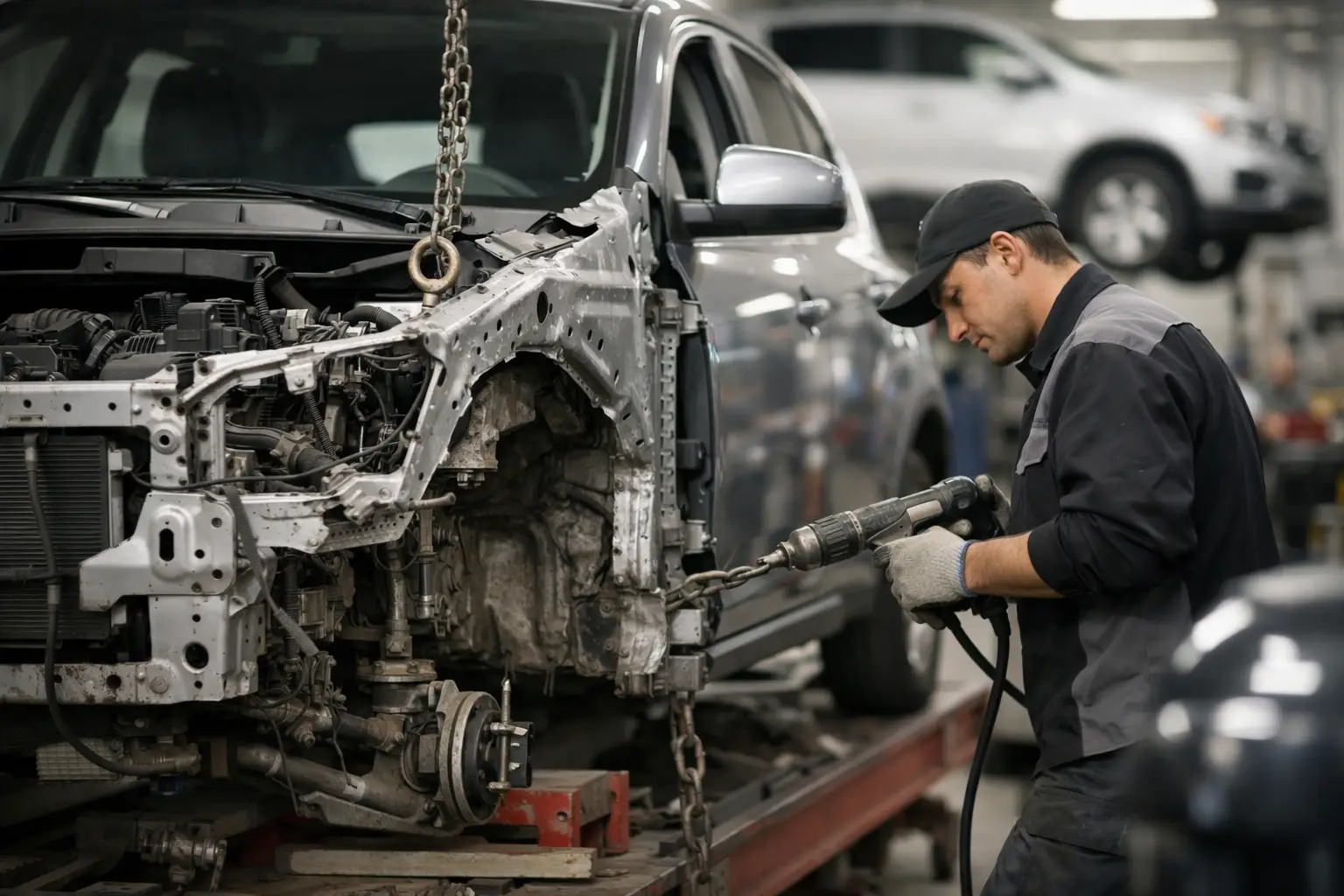
The process starts with an inspection of the vehicle’s body, undercarriage, steering, suspension, wheels, and safety-related components. Technicians look beyond the most visible impact point because collision energy can travel through the structure. A damaged front bumper, for example, may conceal issues with reinforcement bars, rails, cooling supports, or suspension components.
The vehicle is then measured against manufacturer specifications. Electronic or computerized measuring equipment can identify deviations that are difficult or impossible to judge by eye. This establishes a repair plan based on facts rather than appearances.
2. Controlled Pulling and Structural Correction
When a rail, pillar, apron, or other structural section is out of position, the vehicle may be secured to frame-straightening equipment. Controlled hydraulic pulls bring the structure back toward its specified location. The key word is controlled. Metal must be corrected in the proper sequence and checked as work progresses.
The repair method depends on the material, the location of the damage, and manufacturer repair procedures. Some components can be repaired safely. Others require replacement because they are engineered to absorb impact forces in a particular way. High-strength steel, aluminum, and advanced bonding methods can require specialized repair procedures. There is no one-size-fits-all approach.
3. Mechanical, Suspension, and Safety-System Repairs
Structural repair and mechanical repair often overlap. A collision can damage tie rods, control arms, struts, wheel bearings, brakes, subframes, tires, and wheels. These parts must be inspected before final alignment because their condition directly affects handling and tire contact with the road.
Modern vehicles may also need diagnostic checks after collision work. Sensors, cameras, radar units, airbags, seat belt pretensioners, and advanced driver-assistance features can be affected by impact damage or by the repair process. Depending on the vehicle, calibration or further testing may be necessary after repairs are complete.
4. Alignment, Verification, and Roadworthiness Checks
A wheel alignment is a final verification step, not a substitute for frame repair. Once the structure and suspension components are corrected, technicians check camber, caster, toe, steering-wheel position, and thrust angle. Proper alignment helps protect tire life, improves steering response, and supports stable braking.
The repair should also include a final inspection of panel fit, latches, lights, glass, and repaired areas. The best result is a vehicle that looks right, drives right, and has been evaluated as a complete system.
Why Accurate Repair Matters More Than a Quick Fix
It can be tempting to focus on the visible panel damage or choose the lowest initial estimate. But structural repairs affect more than appearance. An improperly repaired vehicle can develop continuing alignment problems, accelerated tire wear, water leaks, wind noise, and uneven handling. It may also complicate future resale, insurance claims, or inspections.
Safety is the larger issue. Crumple zones and structural reinforcements are designed to direct collision forces away from occupants. If a damaged area is not repaired or replaced correctly, the vehicle may not respond as intended in a future impact. That is a trade-off no driver should have to make for a faster cosmetic repair.
At the same time, not every damaged vehicle requires extensive pulling or major structural replacement. A thorough inspection may show that the frame is within specification and that the repair is limited to panels, brackets, or mechanical parts. Clear diagnosis helps you avoid paying for work that is not needed while ensuring necessary work is not overlooked.
Insurance, Estimates, and Repair Decisions
After an accident, the repair process can feel like one more task competing for your time. Start by documenting the damage, reporting the claim when appropriate, and arranging a professional estimate. You can ask what structural measurements were taken, which parts are being repaired versus replaced, and whether the estimate includes alignment and required calibrations.
Insurance coverage, deductibles, and claim requirements vary, but a capable collision facility can work with insurance companies and help clarify the repair scope. If you are paying out of pocket, ask for a clear explanation of priorities. Safety-related structural, suspension, braking, and steering repairs should never be deferred. Cosmetic work may offer more flexibility depending on the damage and your budget.
DAS Automotives provides collision restoration, frame and suspension repair, mechanical service, paintwork, parts, and inspections in one Edmonton facility. That matters when structural damage affects both the body and the way your vehicle drives. Instead of moving between separate shops, you can have the repair evaluated as one connected job. Repair financing options may also help reduce the immediate pressure of an unexpected repair bill.
Choosing a Shop for Structural Repair
The right shop should be comfortable explaining its process in plain language. Ask whether it performs structural measurements, handles suspension and alignment work, and completes post-repair inspections. If your vehicle has cameras, radar, or driver-assistance features, ask how those systems will be checked or calibrated.
Experience matters, but communication matters too. You should understand what was damaged, why each repair is recommended, and what the final verification includes. A trustworthy estimate does not rely on vague language or pressure. It gives you a realistic picture of the work needed to restore your vehicle safely.
If your car has been hit, pulls after an impact, or cannot be aligned properly, do not wait for the issue to become more expensive. A professional structural inspection gives you a clear place to start and helps you stay in control of your car before the next drive demands more from it.