A pothole hit that rattles through the steering wheel, a vehicle that pulls when you brake, or tires wearing down far too early can all point to the same area of concern: the suspension. Car suspension repair Edmonton drivers arrange promptly is not just about making a ride more comfortable. It protects handling, braking stability, tire life, and confidence behind the wheel - especially through Alberta’s rough roads, winter conditions, and changing temperatures.
Suspension concerns can develop gradually, so they are easy to put off. But when worn components begin affecting alignment or tire contact with the road, a small repair can become a larger safety and maintenance issue. A professional inspection gives you a clear picture of what is worn, what caused it, and which repairs should be addressed first.
What Your Suspension Does for Your Vehicle
Your suspension is a system, not one single part. It includes shocks or struts, springs, control arms, ball joints, bushings, sway bar links, wheel bearings, and related steering and alignment components. Together, these parts keep the tires planted on the road while allowing the vehicle to absorb bumps and stay controlled through turns and stops.
When everything is working properly, the vehicle should feel stable rather than floaty, controlled rather than harsh, and predictable when you steer or brake. A suspension problem changes that relationship between the tires and road surface. The vehicle may still be drivable, but it may no longer respond the way you expect.
That matters after a collision as much as it does after everyday wear. Even a curb strike, a deep pothole, or a minor impact can bend a component or shift alignment angles enough to affect handling. Visible body damage is not required for suspension damage to be present.
Signs You May Need Car Suspension Repair in Edmonton
Some warning signs are obvious, while others show up slowly over months of driving. Pay attention if your vehicle starts bouncing repeatedly after a bump, dips sharply forward when braking, leans excessively around corners, or feels unstable on uneven pavement. Those symptoms can indicate worn shocks, struts, springs, or other components that are no longer controlling vehicle movement effectively.
Steering feedback also tells an important story. A steering wheel that vibrates, feels loose, wanders, pulls to one side, or sits off-center should be inspected. These issues can be related to suspension wear, wheel alignment, tire condition, steering components, or a combination of all three. Proper diagnosis matters because replacing only the most noticeable part may not correct the underlying cause.
Watch your tires, too. Uneven wear on the inside or outside edges, cupping across the tread, or one tire wearing much faster than the others can signal an alignment or suspension concern. Tires are expensive, and they are your vehicle’s only contact with the road. Addressing the cause before installing new tires can help protect that investment.
Other signs worth taking seriously include clunking over bumps, squeaking when turning, grinding near a wheel, fluid leaking from a shock or strut, and a vehicle sitting lower on one corner. None of these symptoms automatically confirms a specific failed part, but each is a good reason to schedule an inspection.
Why Edmonton Roads Can Be Hard on Suspension Parts
Suspension parts are built to handle normal road conditions, but Edmonton drivers know that normal can include frost heaves, potholes, gravel, construction zones, packed snow, and sudden temperature swings. Repeated impacts can wear bushings, loosen links, damage struts, or knock wheel alignment out of specification.
Winter adds another layer. Cold temperatures can make rubber components less flexible, while moisture, road salt, and debris can accelerate corrosion around fasteners and underbody parts. A component that was only mildly worn in fall may become noticeably noisy or unstable by late winter.
This does not mean every bump requires a repair visit. It does mean a change in how your vehicle feels deserves attention. Acting early often gives you more repair options and can prevent excess tire wear, damage to connected components, or a more difficult alignment correction later.
Suspension Repair Starts With Accurate Diagnosis
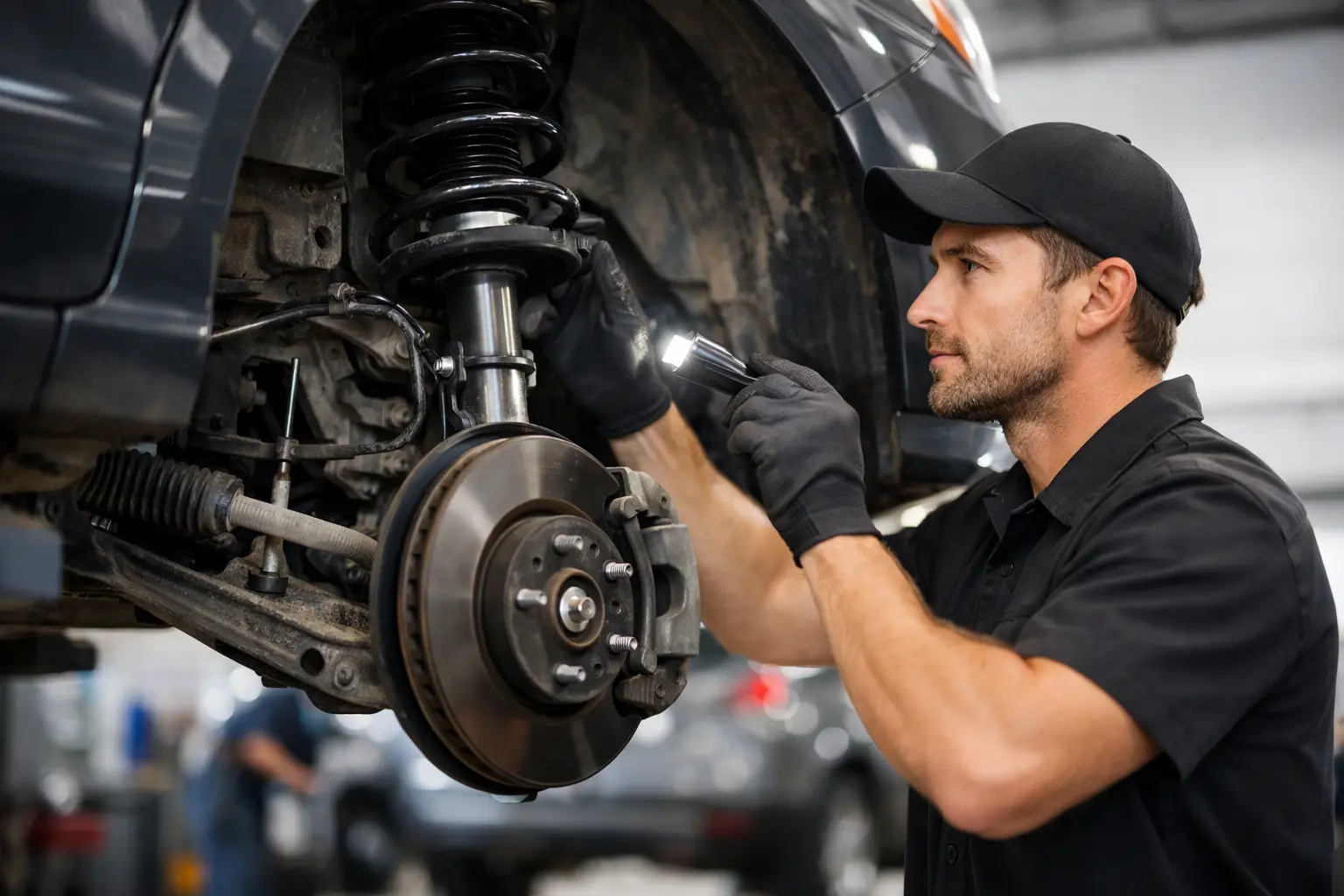
Good suspension repair is not guesswork. The first step is a hands-on inspection of the vehicle’s suspension, steering, tires, and alignment-related components. A technician looks for play in ball joints and tie rods, cracked or deteriorated bushings, leaking shocks or struts, bent control arms, damaged springs, loose sway bar links, and signs of impact damage.
The inspection should also consider the customer’s concern. A clunk heard only when backing out of a driveway may point to something different than a highway vibration or a pull that appears only under braking. Describing when the issue happens, where you feel it, and whether it began after an impact can help narrow the diagnosis.
In some cases, the repair is straightforward: replace worn sway bar links, a failed ball joint, or leaking struts. In others, several related parts need attention. For example, installing new struts on a vehicle with worn mounts, damaged springs, or alignment issues may leave you with a result that still does not feel right. The right recommendation depends on the condition of the whole system, not simply the first part that shows wear.
Common Repairs and the Decisions Behind Them
Shocks and struts are among the most familiar suspension repairs. They control bounce and body movement, but they do not always fail suddenly. Replacing them can improve stability and comfort, particularly when the vehicle has excessive bouncing, nose dive, or fluid leaks. On many vehicles, struts are integrated into the front suspension and may require additional components or alignment work after replacement.
Control arms, ball joints, and bushings keep the wheels positioned correctly as the suspension moves. Wear in these parts can create clunks, looseness, uneven tire wear, or alignment problems. Depending on the vehicle, it may make more sense to replace an individual bushing or ball joint, while other designs call for replacing the complete control arm. The best choice depends on part condition, labor requirements, availability, and long-term value.
Springs can crack, sag, or break, particularly in regions with harsh road conditions. A broken spring can cause a low ride height, tire contact concerns, noise, or poor handling. Wheel bearings, sway bar links, and steering components can create similar noises, which is another reason an inspection is more useful than replacing parts based on sound alone.
If an impact bent a suspension or steering component, wheel alignment is normally part of the repair process. Alignment is not a substitute for replacing damaged parts. It is the final adjustment that ensures the wheels are set to the manufacturer’s specifications after the system is structurally sound.
Do Not Separate Suspension Repairs From Tire and Alignment Care
Suspension, tires, steering, and alignment work together. A vehicle can have new tires and still wear them out quickly if the suspension has excessive play or the alignment is off. It can also receive an alignment that does not hold if worn parts are not repaired first.
After suspension work, an alignment check is often recommended and may be necessary. This is especially true after replacing control arms, struts, tie rods, or parts damaged by a pothole or collision. It helps the vehicle track straight, improves steering feel, and supports even tire wear.
For drivers managing a repair budget, it is reasonable to ask which items are urgent for safety and which should be planned for later. A clear repair plan should explain that difference. Some worn components can be monitored for a period, while others have enough movement or damage that they should not wait.
What to Expect From a Professional Repair Visit
Bring the vehicle in with a description of the symptoms and any recent events, such as hitting a pothole, sliding into a curb, or being involved in a collision. If you have noticed unusual tire wear or changes in handling, mention those details even if the vehicle seems fine during a short drive.
At DAS Automotives, suspension concerns can be evaluated alongside mechanical repairs, wheel alignment, tire service, collision restoration, and frame-related issues when needed. That one-stop approach is particularly useful when a vehicle has both visible damage and a handling concern, or when an inspection identifies related repairs that should be coordinated.
A quality repair should leave you knowing what was found, why the recommended work matters, and what follow-up service may be required. If an unexpected repair creates financial pressure, ask about available repair financing options so you can make a practical decision without losing sight of safety.
A Better Next Step Than Waiting for the Noise to Get Worse
Suspension problems rarely improve with more driving. The sound may come and go, but the wear behind it can continue affecting tire wear, alignment, braking control, and ride quality. If your vehicle feels different after an impact or no longer handles with the stability you expect, a timely inspection is the practical way to stay in control of your car and protect the miles ahead.