A vehicle can look clean, drive smoothly, and still fail an out of province inspection in Edmonton. That is because this inspection is not a quick visual check. It is a regulated safety assessment designed to confirm that a vehicle brought into Alberta meets provincial roadworthiness standards before registration.
For drivers moving to Alberta, buying a vehicle from another province, or bringing home a used vehicle from outside the province, the process can feel like one more delay between purchase and driving. The best way to stay in control is to understand what the inspection covers, prepare the vehicle properly, and leave enough time for repairs if they are needed.
When Is an Out of Province Inspection Required?
In many cases, Alberta requires an out-of-province inspection before a vehicle that was previously registered outside Alberta can be registered here. There are exemptions and special circumstances, so it is wise to confirm the current requirements with an Alberta registry before booking service.
The inspection requirement commonly applies when you have purchased a used car, truck, SUV, van, or motorcycle from another Canadian province or territory. It may also apply to a vehicle you have moved to Alberta with. The inspection certificate is typically valid for a limited period, so avoid completing it too early if you are still waiting on ownership documents, insurance, or registry paperwork.
A vehicle imported from the United States may involve additional federal import and compliance requirements. An Alberta out-of-province inspection addresses provincial registration standards, but it does not replace every import document or federal compliance step. Confirm those details before arranging transport or assuming the inspection alone will complete the process.
What an Out of Province Inspection in Edmonton Checks
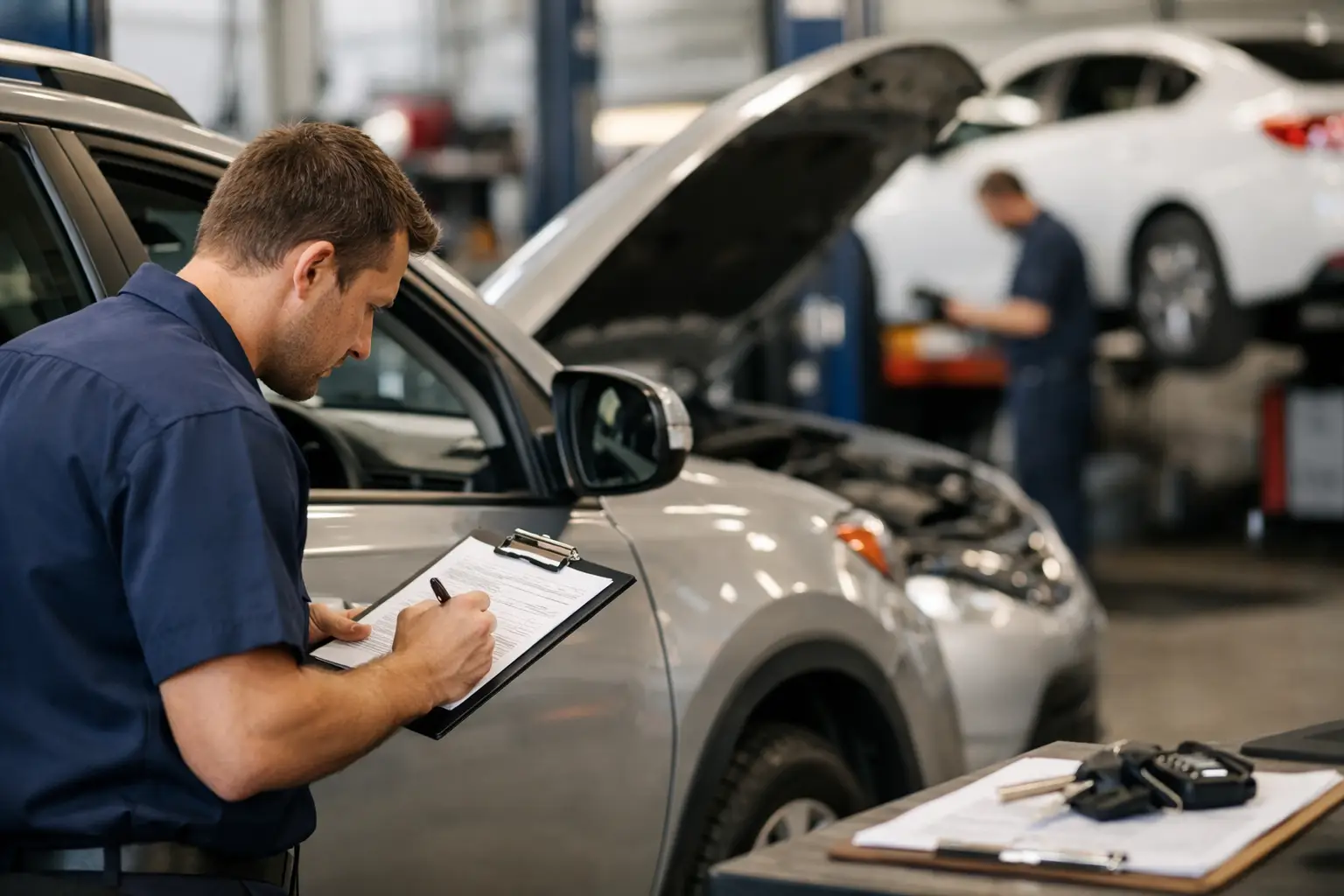
The inspection focuses on safety-related systems and visible condition. It is more detailed than a basic oil-change check and more structured than a casual used-car assessment. An inspector follows established requirements and records whether components meet the applicable standards.
Brakes are a major part of the inspection. The shop may assess brake operation, brake lines, hoses, pads, rotors, parking brake function, and visible signs of leakage or excessive wear. A vehicle that stops without obvious trouble on a short test drive can still have worn components or corroded lines that need attention.
Steering, suspension, tires, and wheel-related components also receive close attention. Worn ball joints, tie rods, control-arm bushings, shocks, struts, wheel bearings, or damaged tires can affect handling and may prevent the vehicle from passing. An alignment issue by itself is not always the central concern, but uneven tire wear or loose suspension parts can point to a larger problem that needs repair.
The inspection also examines lights, reflectors, windshield condition, wipers, mirrors, horn, seat belts, exhaust components, and visible body or frame damage. Rust deserves particular attention on vehicles that have spent years in regions with heavy winter road treatment. Surface rust is different from structural corrosion, but corrosion affecting a mounting point, brake line, frame area, or suspension component can become a safety issue quickly.
For collision-repaired vehicles, the condition of the structure and related components matters. A repaired bumper cover may be cosmetic, while damage affecting suspension geometry, frame areas, lighting mounts, or safety equipment requires a more careful review. This is where a full-service facility can be useful: inspection findings, mechanical repairs, body repairs, parts, and alignment work can be coordinated instead of sending the vehicle between several shops.
What to Bring to Your Appointment
Paperwork requirements can vary by vehicle and situation, but you should arrive with the documents connected to the vehicle’s ownership and previous registration. This often includes your proof of ownership or bill of sale, the prior registration, and identification. If the vehicle has a salvage history, has been rebuilt, or was imported, bring the related documents as well.
Before the appointment, check with your registry about the documents it will require after the inspection. The goal is to avoid a passed inspection certificate sitting unused while you track down a missing form.
Bring the vehicle in as it is normally driven. Remove excessive cargo from the trunk or cargo area, make sure the vehicle can be accessed safely, and have the wheel lock key available if locking lug nuts are installed. If warning lights are on, tell the shop before the inspection. A warning light does not automatically explain the problem, but diagnosing it early can prevent surprises.
Common Reasons Vehicles Need Repairs
Many out-of-province vehicles need some work before they can pass. That does not necessarily mean the purchase was a bad one. It often means normal wear was not addressed before the vehicle changed hands, or the vehicle has been exposed to different weather and road conditions.
Common issues include worn brakes, tire damage or insufficient tread, loose steering or suspension parts, cracked windshields in the driver’s view, burned-out lights, exhaust leaks, fluid leaks, and corrosion. Older vehicles may also need attention to brake lines, fuel lines, bushings, or wheel bearings. On trucks and SUVs, suspension modifications, oversized tires, and altered lighting can create compliance questions that should be assessed before the inspection.
A failed inspection is not a final verdict on the vehicle. It is a clear list of conditions that must be corrected for the vehicle to meet the standard. Ask the shop to explain the findings in plain language, including which repairs are required for compliance and which maintenance items are recommended but not immediately required.
How to Avoid Delays and Repeat Visits
The biggest mistake is treating the inspection as the first maintenance visit the vehicle has received in years. If possible, arrange a pre-inspection assessment before your official appointment, especially for an older vehicle, a private-sale purchase, or a vehicle with unknown service history. This gives you an opportunity to identify likely issues without the pressure of a registration deadline.
Do not assume a recent safety inspection from another province will satisfy Alberta requirements. Inspection rules, forms, and standards are not identical everywhere. A seller’s statement that the vehicle is “safety checked” is useful background, but it is not a substitute for the Alberta process.
Timing also matters. Book early enough to allow for repairs, parts availability, and a reinspection if needed. This is particularly helpful during busy moving periods, after major weather events, or when you need the vehicle for work, school runs, or daily commuting. If repairs create an unexpected expense, discuss the repair plan before authorizing work so you understand priorities, timing, and available options.
Inspection Is Not the Same as a Pre-Purchase Evaluation
An out-of-province inspection checks whether a vehicle meets specific safety requirements. It is not a complete prediction of future reliability, fuel economy, cosmetic condition, or the value of the purchase. A vehicle can pass inspection while still having future maintenance needs, such as aging fluids, a weak battery, or a component approaching the end of its service life.
If you have not bought the vehicle yet, a separate pre-purchase inspection can provide a broader picture. It can help you identify developing mechanical problems, evidence of previous collision repairs, service needs, and conditions that may affect what the vehicle is worth to you. For a private sale, that information can be as valuable as the inspection certificate itself.
Get Clear Answers Before You Register
A proper inspection should leave you with more than a pass or fail result. You should know what was checked, what needs attention, and what your next step is. At DAS Automotives, drivers can have inspection concerns reviewed alongside mechanical, suspension, alignment, collision, and parts needs in one Edmonton facility.
If your vehicle needs work, focus first on the items required for safety and registration. Then make a plan for the maintenance that will protect your investment after the paperwork is complete. A little preparation before your appointment can turn an out-of-province vehicle from a stressful unknown into a safe, reliable vehicle ready for Alberta roads.