A steering wheel that sits slightly off-center may seem like a small annoyance, but it can be the first sign that your vehicle is not tracking the way it should. Wheel alignment Edmonton drivers need is about more than a straight steering wheel. It protects tire life, improves control, and helps your vehicle respond predictably when roads are rough, wet, or covered in snow.
Edmonton driving can be hard on suspension and steering components. Potholes, frost heaves, construction zones, curb contact, and winter road conditions can all shift alignment angles over time. If your car starts pulling, your tires wear unevenly, or the vehicle feels unsettled at highway speed, an alignment inspection can identify the cause before it becomes a more expensive repair.
What Wheel Alignment Actually Adjusts
Wheel alignment does not mean the technician is simply pointing the front tires straight ahead. A proper alignment measures and adjusts the angles that determine how each wheel meets the road. These angles affect steering response, stability, and how evenly the tire tread wears.
The key measurements are toe, camber, and caster. Toe describes whether tires point slightly inward or outward when viewed from above. Camber is the inward or outward tilt of the wheel when viewed from the front. Caster is the steering-axis angle that helps the vehicle return to center after a turn and remain stable in a straight line.
Every vehicle manufacturer provides specifications for these settings. The goal is not to force all numbers to a single universal position. The goal is to bring the vehicle back within its correct range while accounting for its suspension condition, tire size, and the way it is built.
Alignment is also different from wheel balancing. Balancing corrects weight distribution around a tire and wheel assembly to reduce vibration. Alignment corrects the direction and angle of the wheels. A vehicle can need one service, the other, or both.
Signs You May Need Wheel Alignment in Edmonton
The clearest warning sign is a vehicle that pulls left or right on a flat, level road. Road crown can cause a slight drift, so the test should not be done on every street. A consistent pull that requires you to keep correcting the steering wheel deserves attention.
An off-center steering wheel is another common sign. If you are driving straight but the wheel sits turned to one side, the alignment may be out. This can happen gradually from daily driving or suddenly after striking a pothole, curb, or road hazard.
Tire wear often tells an even more useful story. Excessive wear on the inner or outer edge can point to a camber issue. Feathered tread, where one side of each tread block feels sharper than the other, often suggests incorrect toe. These patterns can shorten tire life quickly, especially on newer tires that should have delivered many more miles.
You may also notice loose or wandering highway handling, steering that does not return smoothly after a turn, or a vibration that remains after tire balancing. Vibration is not always an alignment problem - it can come from tires, wheels, brakes, or suspension parts - but it should be checked rather than ignored.
Why Alignment Should Start With an Inspection
An alignment adjustment only works when the parts that hold the wheels in position are in good condition. Worn ball joints, tie-rod ends, control arm bushings, wheel bearings, struts, springs, or damaged suspension components can allow angles to move while the vehicle is driving. In that situation, adjusting the numbers without addressing the underlying issue may offer only a short-term improvement.
This matters after a collision as well. Even a minor impact can affect a wheel, tire, steering linkage, suspension arm, or subframe. Cosmetic damage may be limited, while the vehicle’s handling geometry has changed underneath. A detailed inspection can reveal whether the issue is a routine adjustment or whether repair is needed before alignment can be completed accurately.
At DAS Automotives, alignment service can be handled alongside tire, brake, mechanical, frame, and suspension repairs when needed. That saves drivers from having to coordinate several shops when a pull or uneven tire wear turns out to involve more than an adjustment.
What Happens During a Professional Alignment
The appointment begins with a check of tire condition and inflation. Tires with low pressure, severe uneven wear, broken belts, or damage can affect the way a vehicle drives and may need attention before final alignment measurements are meaningful.
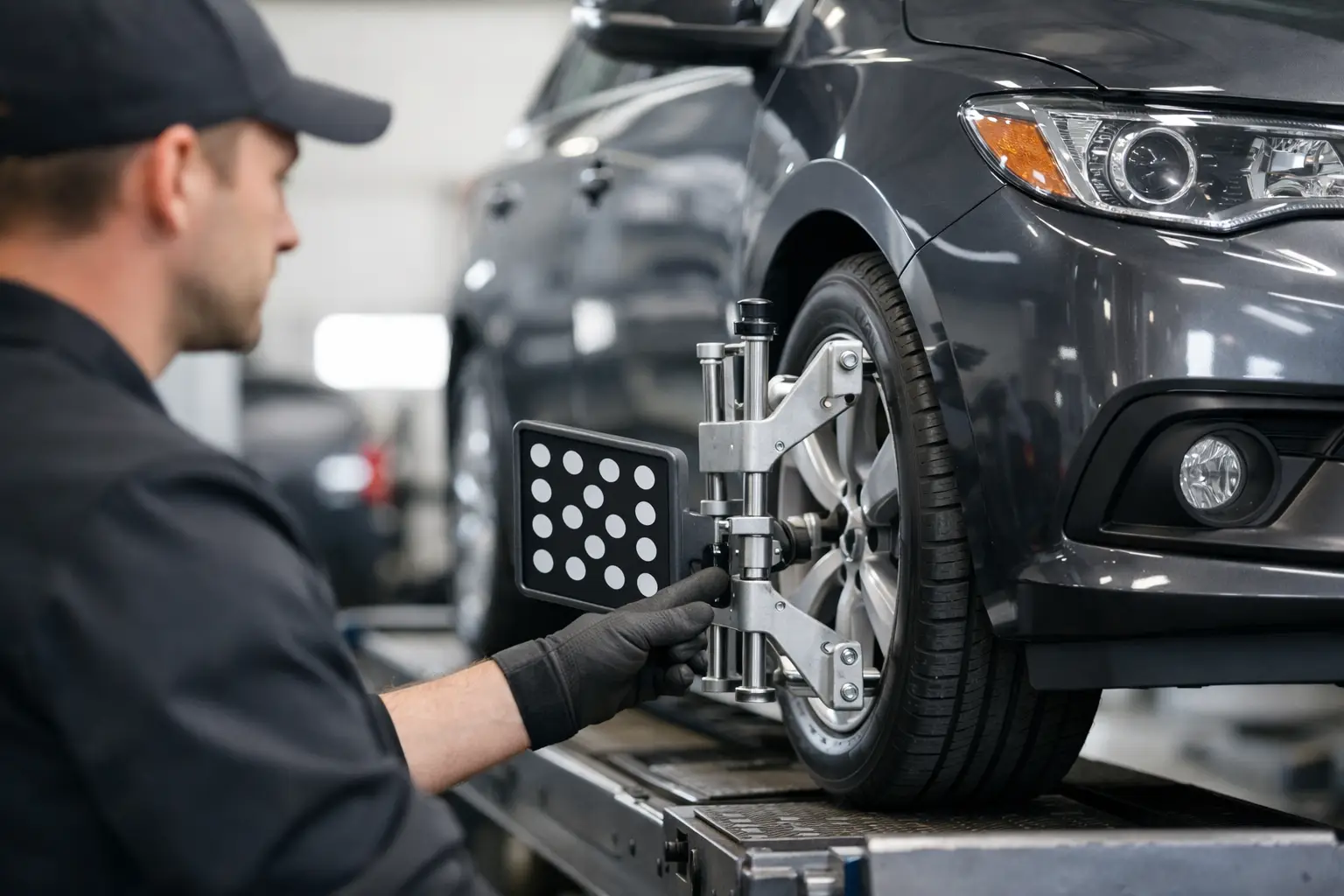
A technician then inspects accessible steering and suspension components for looseness, wear, or visible damage. The vehicle is placed on alignment equipment, and sensors measure the current wheel angles against manufacturer specifications. The technician makes available adjustments, centers the steering wheel, and verifies the final readings.
Not every angle can be adjusted on every vehicle. Some factory suspension designs have limited adjustment points. If camber or caster is outside specification and cannot be corrected through normal adjustment, the technician may recommend checking for bent or worn parts, collision damage, or approved adjustment components. This is where a clear explanation matters. A quality alignment is not a promise to make damaged parts behave like new without repairing them.
When Should You Schedule an Alignment?
There is no single mileage interval that fits every Edmonton vehicle. A careful driver on smooth roads may go longer than a commuter who regularly travels construction routes or rough pavement. Still, it is sensible to have alignment checked when installing new tires, after a significant pothole or curb strike, following suspension or steering repairs, and after collision work.
It is also worth scheduling an inspection if you see irregular tire wear during seasonal tire changes. Drivers who switch between summer and winter tires have a natural opportunity to look closely at tread condition twice a year. Catching a developing alignment problem at that stage can help preserve the next set of tires.
Do not wait for the steering problem to become dramatic. A small toe error can wear tires much faster than most drivers expect, even when the vehicle still feels mostly normal around town. The cost of an alignment check is often far less than replacing tires early.
Alignment, Tires, and Winter Confidence
A properly aligned vehicle does not create traction where none exists. It will not replace winter tires, safe following distance, or careful driving on ice. What it does provide is a more stable platform for the tires you already have.
When the tires meet the road at the intended angles, the tread can make more even contact with the surface. The steering is more predictable, and the vehicle is less likely to feel as though it is fighting the driver. That is especially valuable during Edmonton winters, when rutted snow, slush, and changing road surfaces demand steady inputs.
If your vehicle pulls during braking, do not assume alignment is the only concern. Brake condition, tire grip, suspension wear, and road surface can all contribute. A complete inspection is the safer approach, particularly if the pull is sudden or severe.
Protect Your Tires Before the Damage Spreads
Your vehicle rarely needs to be visibly hard to control before alignment becomes worthwhile. An off-center wheel, a subtle pull, or one tire wearing faster than the others is enough reason to have it checked. Addressing the issue early gives you a better chance of protecting your tires, maintaining confident handling, and staying in control of your car through every season.